The Origins of the Name 'Cobbydale'.

Based on an article written by Stephen Brown and adapted and edited by David Mason, first published in its original form in the Silsden Local History Group’s Ninth News Sheet in May 2020…..
To the Anglo-Saxons, a dale was a long valley, and a den (or dene) something a lot more modest. Silsden, like Howden and Riddlesden, was named for a very short valley, no more than a scoop out of the side of the Aire-dale. A beck arrives in Silsden having cut its way through a narrow ravine that Anglo-Saxons called a clough, and the Norsemen a ghyll. It is a typical den, and whoever picked the name Saxondene for the Barrett’s new housing estate at least got that bit right.
So is Cobbydale simply the valley of the Cobby Beck? It is a sensible assumption. Unfortunately, there is no evidence to back that up. Silsden’s earliest official O.S. Map of 1853 clearly labels the beck through Silsden simply as “Silsden Beck”. There is documentary evidence that it was also known as “Stakes Beck”, referring to the line of the weir in the centre of town, which was originally created by driving wooden stakes into the water at that point. No early map or historical local document records any other name. Nowhere is it recorded as Cobby Beck.
What is recorded? William Henry Lambert, an Edwardian artist and local historian, wrote in his 1900 book “Pen and Ink Sketches of Silsden” that earlier in the 19th Century the name “Cobbydale” was attached to the Silsden area “because cobs [and] spiders’ webs were found in large numbers in Silsden at the time”. After all, there were then many nail-making smithies in the village; but such a description could have fitted any of the Victorian rural, valley locations! Lambert, it seems, was using the term in a derogatory sense, specifically implying that dirt in the pursuit of rural, domestic industry equated to a general sense of uncouthness!
The tantalising similarity of “Cobbydale” and “Cobbler” is arresting. Most of the nails made in Silsden in the many Victorian smithies were shoe nails. Silsden had its shoe and clog-making workshops, which were hives of domestic industry – with all that implied.
When I was growing up in Silsden in the 1960s and early 1970s, hardly anyone who lived in the town used the name Cobbydale, and then only as a joke. Cobbydale didn't give its name to any business or voluntary organisation at the time. I think that I first heard the name from my piano teacher Harold Kitchen. Harold liked to chat. He came out with the name as a kind of curiosity, a survival from the past, on its way out like the gas lighting that once lit up the streets. It sounded slightly comical, slightly derogatory, and there was no explanation for it, just as there was no explanation for why people of my grandparents’ generation called Bradley “t' Holy City”. Later, at South Craven School, the name figured now and again in adolescent banter, generally from Steeton lads. Then in 1972 I went to be organist at Steeton church. On being introduced to the choir, the oldest man there, hearing where I was from, responded with the single word: “Cobbydale”.
I don't think you heard the name “Cobbydale” being used much in the other South Craven villages, and certainly not with the same enthusiasm as Steeton folk used it – it was mostly a Steeton thing. On the whole, if you wanted to forge a bond with an old Steetoner, a sure way was to let him (usually him) sound off about Silsden. He would tell you how it was typically an uncouth and noisy place, with a history of riots and constant brawling in the main street, no doubt thanks to all those public houses. It felt as if there was a good deal of “big dog - little dog” feeling in this, where the little dog does all the yapping. Silsden folk never had such an interest in Steeton, compared to Steetoners' strong opinions about Silsden and its shortcomings.
This leads us to the fact that fifty or sixty years ago the name “Cobbydale” was encountered more frequently in Steeton than in Silsden. As to whether it was coined in Steeton, who can tell? The name was known in Silsden from the Victorian Period, but there is no evidence for it earlier than that. It may be relevant that several generations before, at the start of the 1800s, the present line of the upgraded turnpike was surveyed and constructed, along with the graceful, Georgian bridge over the River Aire, properly linking Silsden and Steeton directly for the first time. Previously, there was no reason for the two settlements to have much to do with each other. Maybe that was the start of Steetoners being rude about Silsden.
As a final thought, what of the evidence of the wordsmiths? Chambers Dictionary (1988 edition), is good on northern usage; it derives cobby from cob (a type of horse), and gives a range of dialect meanings stemming from the term, in particular relating to stoutness, briskness, liveliness, and arrogance. This is plausible because if one set of Yorkshiremen decided to find fault with another, a likely starting point might well be arrogance. Silsden’s nail-makers were self-employed and fiercely independent.
Joseph Wright's English Dialect Dictionary of 1898 has some similar meanings, in particular “headstrong”. He also records the more unusual meaning of crowded or cramped – and Victorian Silsden was indeed a busy, populous place, spilling over with a great many domestic nail-making smithies tucked into alleyways and backyards.
Roy Mason put it succinctly when he wrote, “Cobbydale is a by-name for Silsden, and there are innumerable theories as to its origin. Most theories indicate that 'Cobbydale' was a somewhat scornful title inflicted by neighbouring villagers, but the by-name is now fairly widely adopted by local people with a kind of pride as if it shows Silsden is different from the rest, is highly individual.”
The adoption of Cobbydale by Silsdeners surely received an impetus with the shock of local government reorganisation in 1974. The town mourned the loss of its independent status and was receptive to anything that helped it hold on to its identity.
Silsden Local History Group
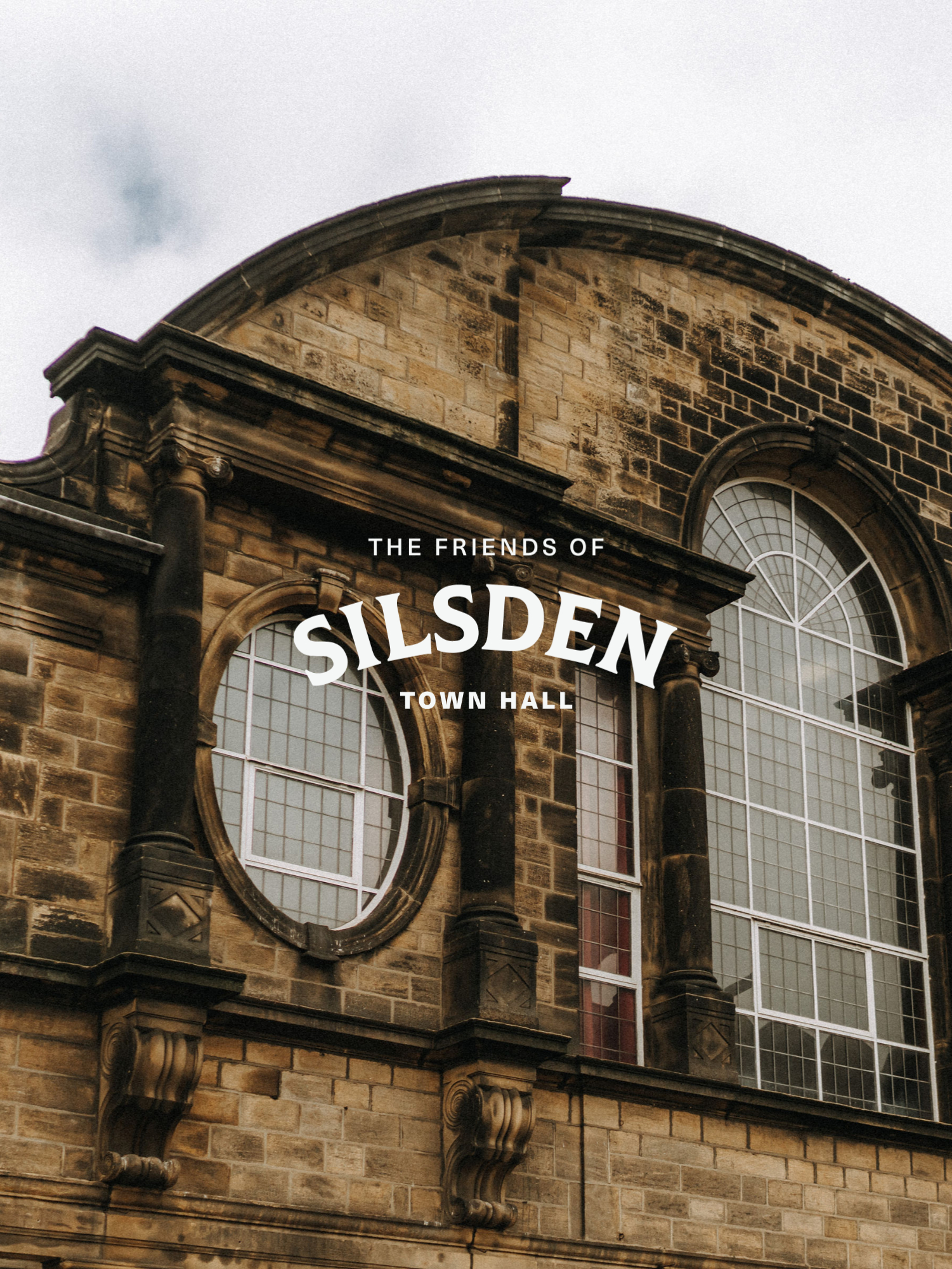
Silsden Local History Group hold the town's archive at Silsden Town Hall. In collaboration with them, we are developing a display of artworks and information boards to celebrate Silsden's heritage. The exhibition of artworks and museum artefacts can be viewed when the Town Hall is open. It is always open during the hours when the library is open (10am to 4pm on weekdays and Saturday mornings). The exhibition on nails and nail makers is now finished and has been removed, with a new exhibition illustrating Silsden's textile industry in its place. It includes the Silsden Tapestry taking centre stage on the ground floor wall in pride of place.
Join Silsden Local History Group for History Research and Access to the Town Archive on select days at Silsden Town Hall.



Comments